Week 3: Tech Demo, Peer Feedback, and What I Learned
Week 3
Published
Topic
DES303
Perfect, I have everything now. Let me rewrite the whole thing as one cohesive piece.
Week 3: Demo Day
This week was the one everything had been building toward. Demo day. This post covers how it went, what my peers thought, and what I took away from watching the rest of the group present.
The Demo
I walked the group through my actual production workflow at The Next Something, opening real client files, live Miro boards and storyboards from projects I had worked on recently. That part landed. People were genuinely surprised to see inside real work rather than a reconstructed example, and the questions that followed told me the content resonated.
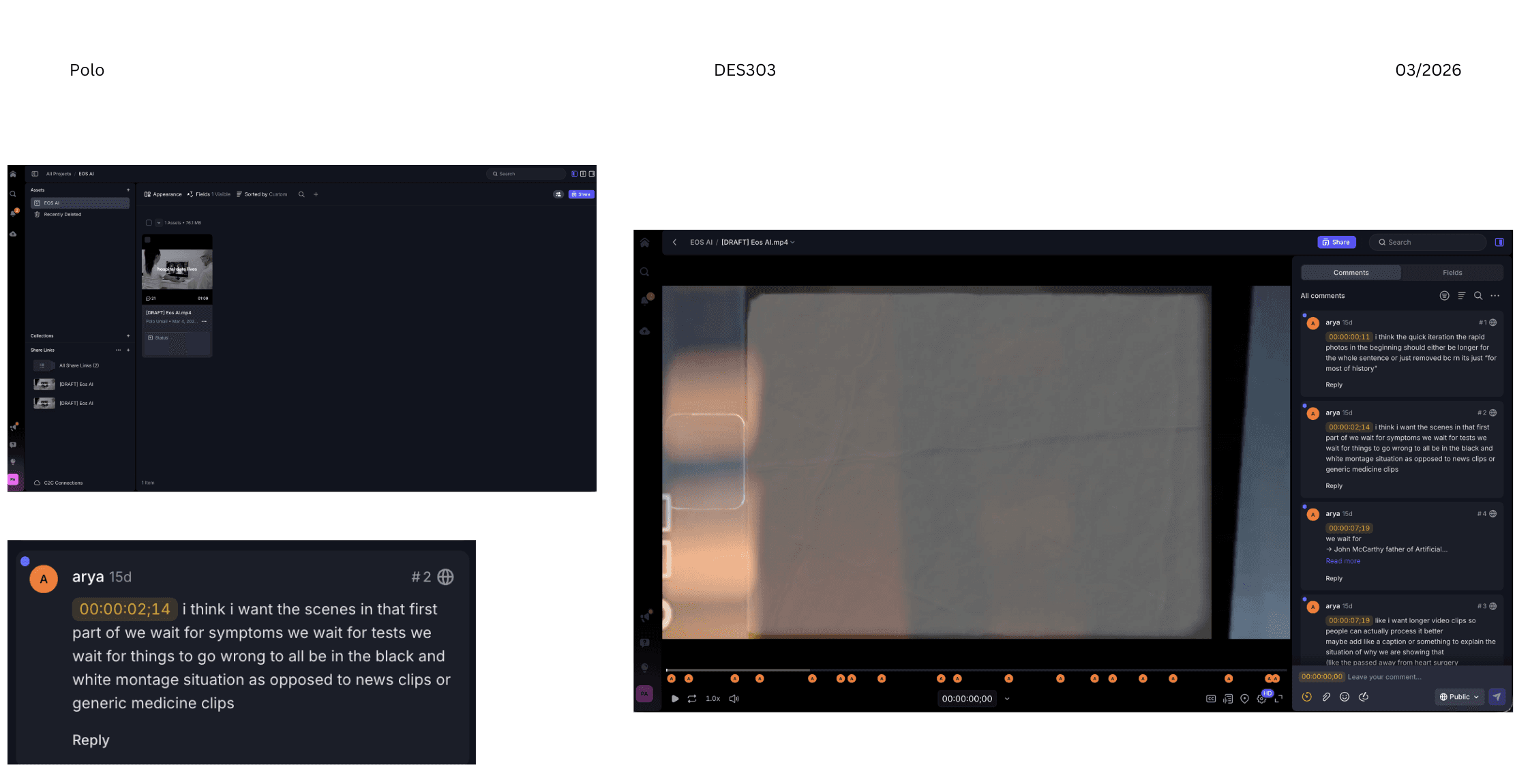
What the questions also told me, though, was that I had moved too fast. I covered four tools, Miro, Loom, Frame.io, and Notion, because all four are genuinely part of how I work and cutting any one of them felt dishonest to the process. But covering four meant I did not have enough time to sit with any single one. The audience had more to ask than I had left room for.
The other thing I noticed watching my groupmates present was how much more alive the room got when people were given something to actually do. Levi ran an Excel demo that had the whole group involved from the start, and the energy was completely different to a presentation where you are just watching someone explain things. I know that principle well from how I run things at The Next Something. I never just explain a workflow to someone and expect it to click. I show them, then I let them try. I did not apply that same thinking to the demo, and that is the clearest thing I would do differently.
Coming from a business background, I was conscious of not assuming too much knowledge, so I tried to explain the tools more thoroughly than I might have if I were presenting to people already in that world. That instinct was right, but it worked against me when it came to depth. I explained broadly instead of going deep on anything specific.
The Feedback
Four peers reviewed my demo and the themes were consistent across all of them. Engaging, relevant, real world examples were a highlight, knowledge of the tools came through clearly. The constructive thread running through all four was the same: more time per tool, and a hands-on component would have made it stronger.
Reading that did not surprise me. I had already felt it in the room when the questions were coming in. But there is something useful about seeing it written down by four different people independently. When one person says something you can wonder if it is just their read. When all four land on the same point, it is clearly true, and it becomes harder to sit with comfortably.
The feedback reinforced something I already believe: people learn by doing, not by watching. I presented a workflow that is fundamentally collaborative and hands-on, and I delivered it in the least hands-on way possible. That gap between content and delivery is the main thing I am taking forward.
Watching the Group
The demos I got the most from were the ones that made me want to change something immediately after watching them.
Rohan's demo on Claude was one of them. He reframed what Claude actually is, not just a chatbot but something with real connectors and practical use cases specifically for designers. I came in as a ChatGPT user and left genuinely convinced to make the switch. That is a strong outcome for a demo. He also showed rather than just explained, which is what made it land.
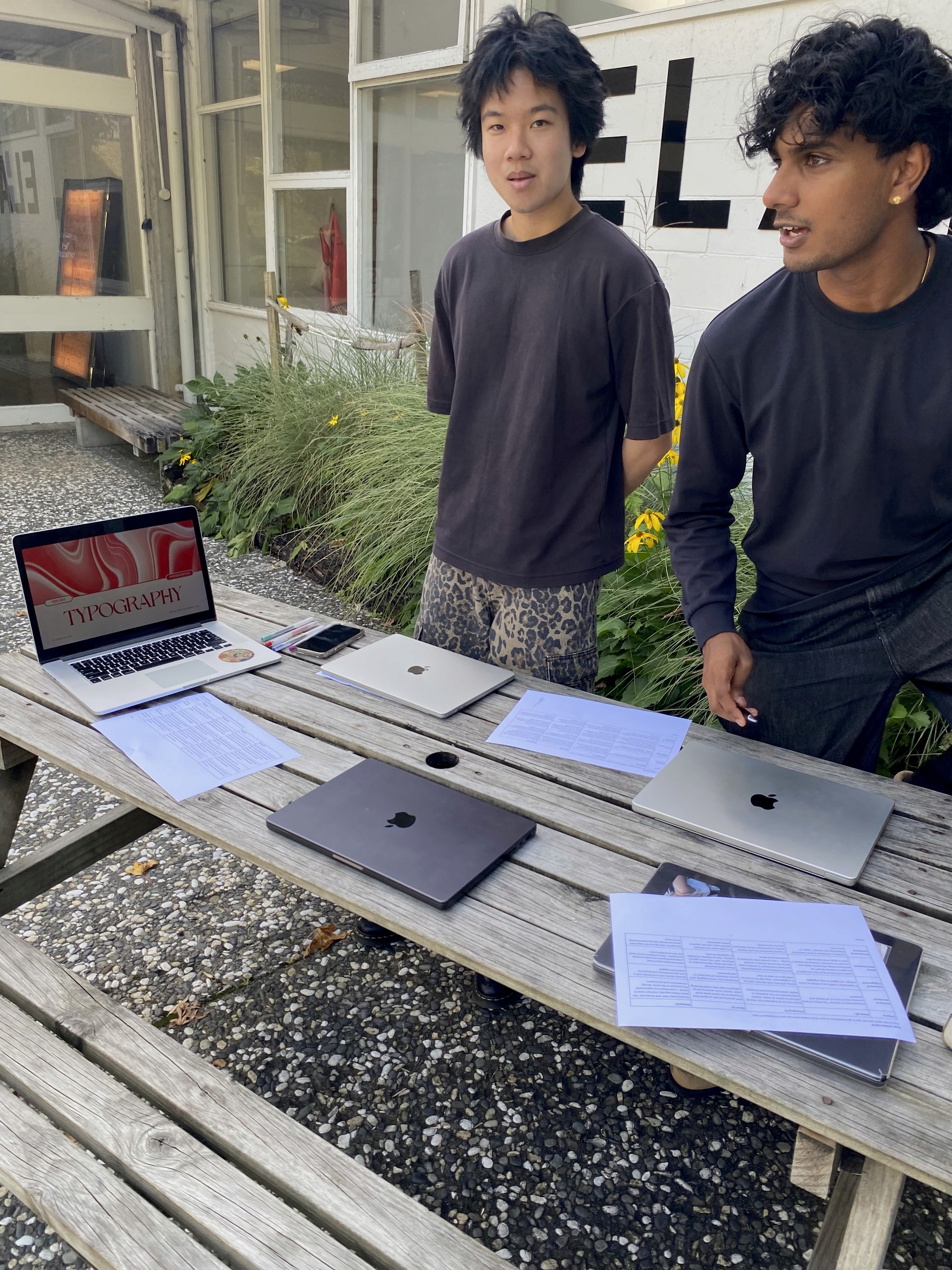
Eddie's typography demo was impressively deep. He clearly knows the field well and did not need notes to get through it. The real world examples grounded it and I learned things I did not expect to. If anything it could have been slightly more concise, but the knowledge behind it was evident throughout.
Levi's Excel demo was the most fun session of the day and genuinely the most participatory. He had the group doing things from early on and the practical takeaways were strong. I left feeling like I could actually go and use what he showed, which is exactly what a demo should do.
Jay's Figma demo was hands-on and practical, showing how the tool works in a real design context and why it matters for designers specifically. Getting to try it during the demo made it stick in a way that watching alone would not have.
Across all four, the pattern was clear: the demos that gave people something to do were the ones that created the most energy and the most memorable takeaways. I am applying that directly to how I approach any presentation from here.
Going Forward
The main thing this week taught me is the difference between knowing something and communicating it well. I know my workflow. I live in it. But knowing it deeply also meant I moved through it at a pace that made sense to me and not necessarily to someone encountering it for the first time. Next time I present anything with real technical content, I am starting from one question: what do I want someone to be able to do by the end of this? Everything else gets built around that answer.